…— It's not a very old house, not truly antique! — the woman, who has stepped outside a couple of minutes ago to see what I'm photographing, smiles apologetically and leads me into her domain.
We pass through a narrow dark entrance hall: to the left, wide damp boards are stacked all the way to the ceiling; to the right, layer upon layer of something unidentifiable hangs on a coatrack.
— Please forgive the mess… We come here on and off, we don't actually live here.
She opens a side door a crack, leans in, and calls out in a raised voice:
— Tolya, we have a guest, come out a minute!
Then, apologizing, she ducks into the low doorway. From behind the door I catch her loud whisper: "Tolya, Tolya, put something on, please… No… A man from Moscow's come, he studies architecture… Come on! It's awkward, really… I don't know…"
The room — square, once fairly large, three windows by three — is divided by a plywood partition into a bedroom and a living room. In the corner, draped partly on the partition and partly on the wall, hangs a red-and-black patterned rug, the kind you keep dreaming about for a week after you've looked at it. A low ceiling, less than two meters probably (I sneak a hand up and touch it without rising to my toes), a plaster medallion in the center with a crystal chandelier straight from my childhood. Blue wallpaper — unmistakably Soviet — with a fine whitish, near-splashy pattern; shelves painted the same shiny blue. To the right, a wall tiled in ceramic — the remains of a stove, it seems — and on it a triptych of posters: a portrait of two tigers in the savanna, a glued-together jigsaw puzzle from the cartoon about Kesha the parrot, and in the center, a fraction higher, a calendar of church holidays whose top half is covered over with Terminator gum-wrapper stickers. I scan the room for the obligatory roly-poly toy and find it under the TV — which sits on a spindly-legged stand — with a VCR on the floor beneath it…
— Please forgive us, — the hostess catches my eye and explains, — we haven't unpacked… though I suppose you've seen far stranger things?
— No, — I smile sincerely, — I'm delighted! Everything has been so perfectly preserved… The real thing! For some reason I assumed from outside that everything had been redone!
I mean it, but the woman doesn't quite seem to believe me. Understandably — we've only been talking five minutes. I mentioned I've photographed maybe fifteen thousand houses but been inside barely a handful. She laughed: well, she could give me that pleasure, especially since almost nothing had changed, seeing as the house had stood essentially empty for sixteen years.
— Oh, come now, you must be very diplomatic. I know that it's… — she's interrupted by a greeting from the opening door: there appears a lean, tall, older man with a broad beard and an even broader smile (a very sea-captain type), who heads straight toward me and grips my hand firmly:
— How do you do. Anatoly.
— Ivan. — I can't help smiling back, — Very pleased to meet you.
— I said, go have a look what the man's photographing out there — maybe something of ours broke!
— No, everything's fine out there, — I'm going door to door for the nalichniki… Oh! Here! — I remember that I've got postcards in my pocket for exactly this kind of moment and hand him one.
The man takes the card, settles into a deep faded-pink armchair, brings the picture close to his eyes, and studies it with concentration.
I lower myself into the chair opposite and immediately leap up again, realizing there's no other seat in the room — but the hostess waves me back down:
— Sit, sit! Don't worry, we'll manage… Tolya will bring one in from the porch. Tolya, your glasses! — She passes him the glasses lying on the table; he clips them on gratefully and goes back to studying the postcard.
— Here's what happened with us, you see, — she's apparently putting tea together in the kitchen, I can hear spoons clattering and cabinet doors thumping, but she herself is out of sight — we left here for good. The way it worked out — in 1998. We were just going away for two weeks, for a holiday, and ended up staying sixteen years. The house stood locked. When I walked back in I gasped — it was like stepping into a museum of yourself.
— Dreadful feeling, — Anatoly adds quietly. — Like coming back to a past life.
— Tolya, are you going to do the talking? — she raises her voice from the kitchen.
— I'm keeping quiet! — He smiles back — I'm heading for the porch to fetch the chair!
He does indeed stand up, gives me a thumbs-up about the postcard, and disappears through the doorway.
— How did you manage to leave for two weeks so neatly? — I want to draw the hostess out.
— Well, you know… it all coincided…
She carries in a tray with cups in saucers, sets them out, and perches on the armrest to tell the story:
— Tolya was waiting for a work visa, we were waiting. He was in computers, working at an IT company then… Waited for the visa six months. You know, it all aligned. We went on a tourist visa for two weeks — just to have a look, a few other things — and then friends here call us, say the visa is ready. Meaning, they said, you'd still need to go to the embassy, but essentially you could stay right then and there. And we just — the three of us, with two suitcases, no one expected anything when we were packing — just stayed on.
At that moment the kettle whistles from the kitchen and she hurries to answer its call.
A dozen questions are forming in my head — why they never came back all those years, and never mind the practical side, what about parents, they must have stayed here — but the moment I frame the question I realize I probably won't ask it.
However, the hostess returns with the teapot (with a little strainer on the spout) and continues on her own:
— At first, you know, it was very hard: pulling us back and just… generally… but there was simply no way. Then money got easier, but by then the children… it all sort of… And so four years ago we flew back for the first time, and since then we try to come every year…
— Wow, — I try to absorb the story. — And how does it feel?
She spreads her hands to indicate everything surrounding us, and laughs:
— Hard to believe people actually lived here! But at the time the house seemed so… big! We'd moved to Tolya's from a rented place; it was his family's house. It seemed big — I remember walking around thinking, "So much room!"
At this moment Anatoly carries in a third armchair and with a theatrical gesture invites his wife to sit. She smiles but hurries back to the kitchen.
— Is she telling you about the poltergeist?
— What poltergeist? — I'm surprised.
— We have one!
Anatoly grins conspiratorially, and I feel as if I've known these people half my life rather than five minutes.
— Tolya! — a mildly displeased voice from the kitchen, then the hostess reappears.
— Don't listen to him, he doesn't believe me! — And turning to her husband — Why do you say that? Just to needle me? — Then back to me — I tell him, you see, that you can hear footsteps here and voices. And things disappear, you know. The salt shaker went missing once, we both looked for it, he looked himself as a matter of fact. And then it turned up on its own. Right in its place. Except it was full. And it had been empty. How do you explain that?
Anatoly pours tea for all three of us, smiling with perfect calm:
— I think… — he shifts his tone, apparently impersonating some scientist or TV host — I put forward the hypothesis that we filled the salt shaker ourselves — you or I — and simply forgot.
— Oh, you never believe anything. — She smiles, though you can see it stings. — I'm telling you, there are things we can't understand yet — like, if in the fifteenth century you'd tried to explain a mobile phone! People simply couldn't conceive of it. Maybe they can't yet, maybe they never will.
— That's completely different. It's… oh, let's not get into it… — he leans back in his armchair, arms folded — that's magical thinking, is what it is. A perfectly natural evolutionary process. Did you know, by the way, that it's been proven that the need for mysticism arises when people have low self-esteem?
I nearly choke on my tea, but Anatoly seems to be needling his wife on purpose (I still don't think I learned her name), and she doesn't flinch:
— Granted, magical thinking. But what do we do with the facts?
— Is this the "grandmother whispered and healed" part?
— Not just "whispered" — she healed me! I told you. Come on, let me tell the whole thing, let the man decide for himself!
And without waiting for Anatoly's agreement, she turns to me:
— This is hard to believe, but — you see — before our wedding I lay in bed for a month, high fever, nobody could figure out what was wrong. One doctor, another, I was just flat on my back, no one could say anything. And I was a Komsomol member, an atheist, didn't believe in anything. I had a friend, Lena — she'd spit over her shoulder three times, do all sorts of things, and I'd even tell her, why do you do that, you're a grown woman! But I'd look the other way: whatever makes you happy, I thought… Then — you see — my grandmother, without telling anyone — I learned all this later — without telling anyone, went off to see one of these healing grandmothers that people said could help. She told her about it afterward. She told this woman: I have a daughter, and she has a daughter, and she's lying ill, no one, no doctors, no one can say why.
She paused:
— The woman named someone — implied it was some kind of curse or evil eye. She even described what she apparently saw… Do put some jam in your tea! This is local, a neighbor makes it, we get it from him — it may be a bit crystallized but it's very good. So grandmother told me afterward: she described a woman that people talked about… there were things said about her, you know how it is. Children would come near her and cry for no reason. And we'd actually gone to visit her not long before, me and my girlfriend. There was some errand — something to drop off or pick up, I can't remember. We went in, Lena had some business with her, and I was just standing to the side. And this woman looked at me and said, "What a beauty!" I got embarrassed, said "Oh, come on." And she walked over and lifted my hair — like she wanted to see whether I'd colored it, whether my roots were darker.
Grandmother described her quite precisely — I recognized her without a doubt.
But that was later. While I was ill, I had a temperature over forty degrees for several days, and the doctor was saying there might only be days left. I was just lying there, grandmother had put a basin by the bed — I didn't know what was in it, the holy water — and laid cloths beside it, and said: put a damp one to your forehead, you'll feel some relief.
And I don't know what it was — coincidence, whatever, you can think of it however you like — but here are the facts: I put the cloth to my forehead automatically, then back in the basin, then back to my forehead — I was barely conscious those days — and then, suddenly: better… better… better… and by evening I had a normal temperature! By that evening!
She pauses, spent — but an inner energy seems to demand a conclusion:
— By evening. Those are the facts. The wedding was already about to be cancelled, no one expected anything…
I'm silent. Fortunately no one is asking my opinion. Anatoly in his corner blows thoughtfully on his teacup, then asks quietly:
— So you learned all of this afterward, from your grandmother's account?
— Oh, "from her account," — the hostess doesn't hide her irritation, — it happened to me! It was me, do you understand! — Clearly only my presence is holding back a bigger outburst. — You asked for facts, so here they are! What do you do — just cross it out?!
For a moment we all sit in silence; the only sound is the clock quietly ticking, tickling the ear. And then something else… a kind of shuffling and… thudding… something laboriously turning over… groaning… somewhere deep in the house… I hear it too!
Though honestly, in spite of all these astonishing auditory hallucinations, I want to sink through the floor. I hadn't imagined a conversation that started so peacefully would turn into a conflict — apparently through my fault. Obviously this isn't the first time this topic… and the awkwardness probably won't lift by itself now…
But then, barely half a sip of tea later, I hear the hostess speaking in her ordinary calm voice again. I look up from my cup — and as if the last few minutes never happened — I stare at her and can't help marveling at what internal work she managed in those few seconds:
— He doesn't believe me… — she smiles, peacefully fishing a cherry out of the jam dish, — Just you watch — I won't tell you where your lemon jam is, and you'll know!
— No! — Anatoly's face goes to theatrical horror, meeting her halfway — I believe you! I agree to everything! Just tell me, tell me, tell meeee!
— That's more like it! — she concludes triumphantly, and reaching out, opens the cabinet door directly behind his back.
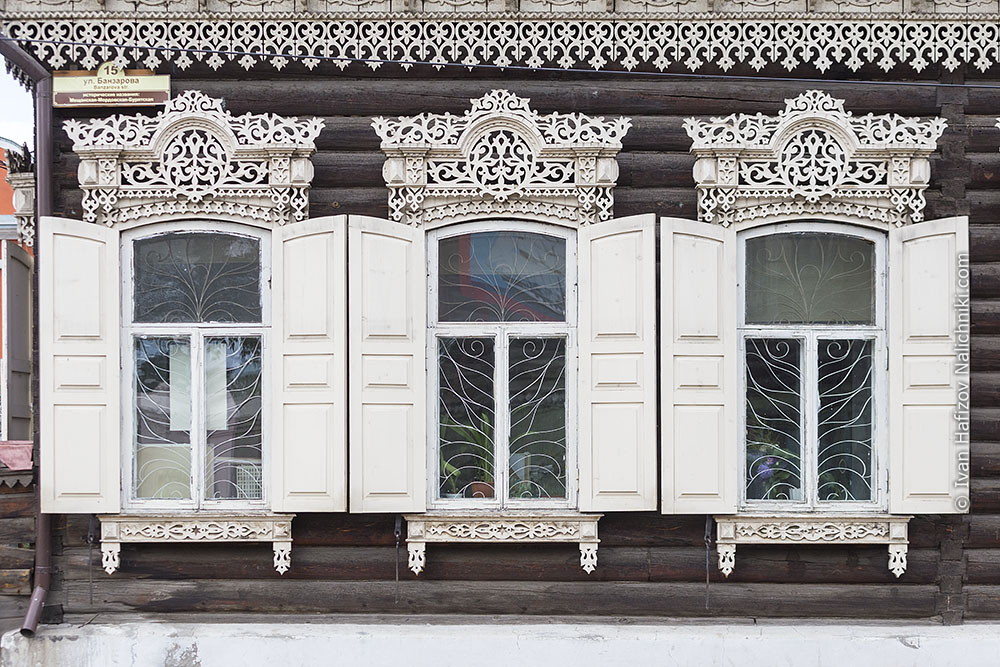
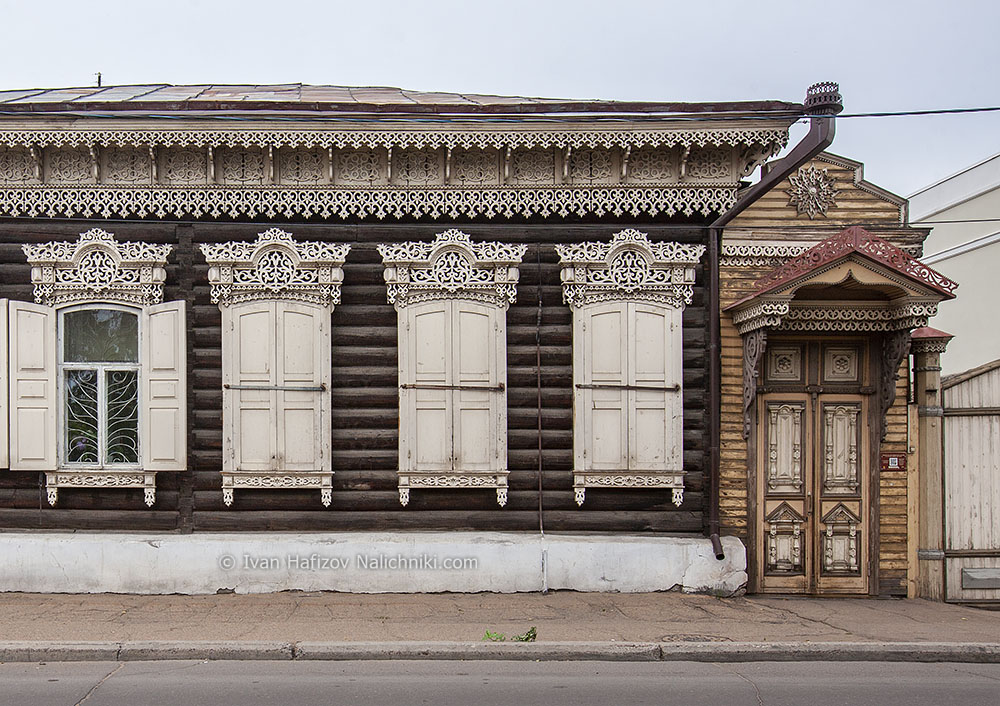
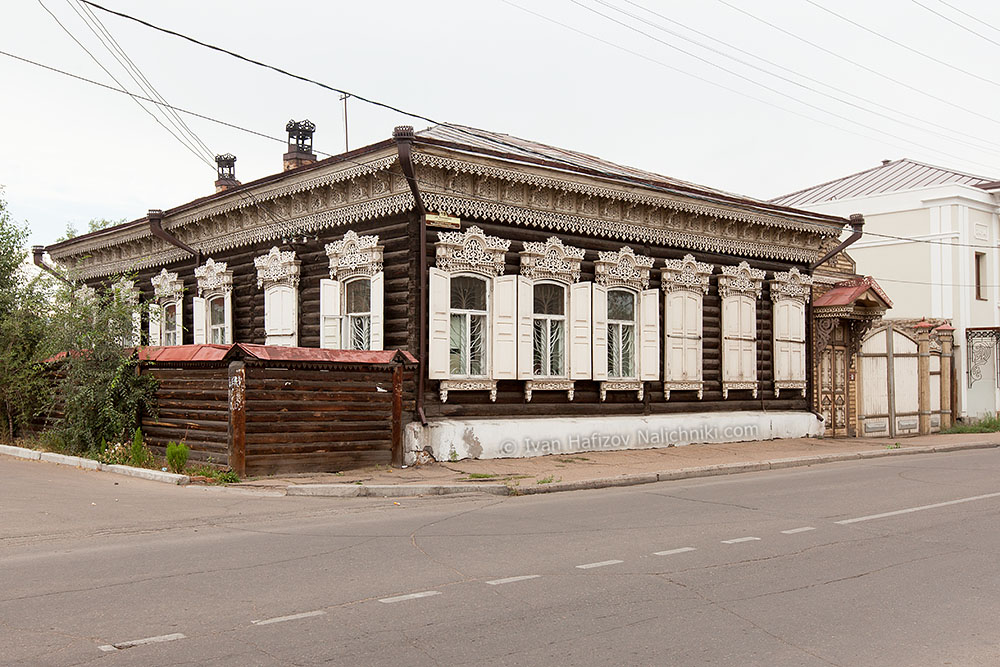
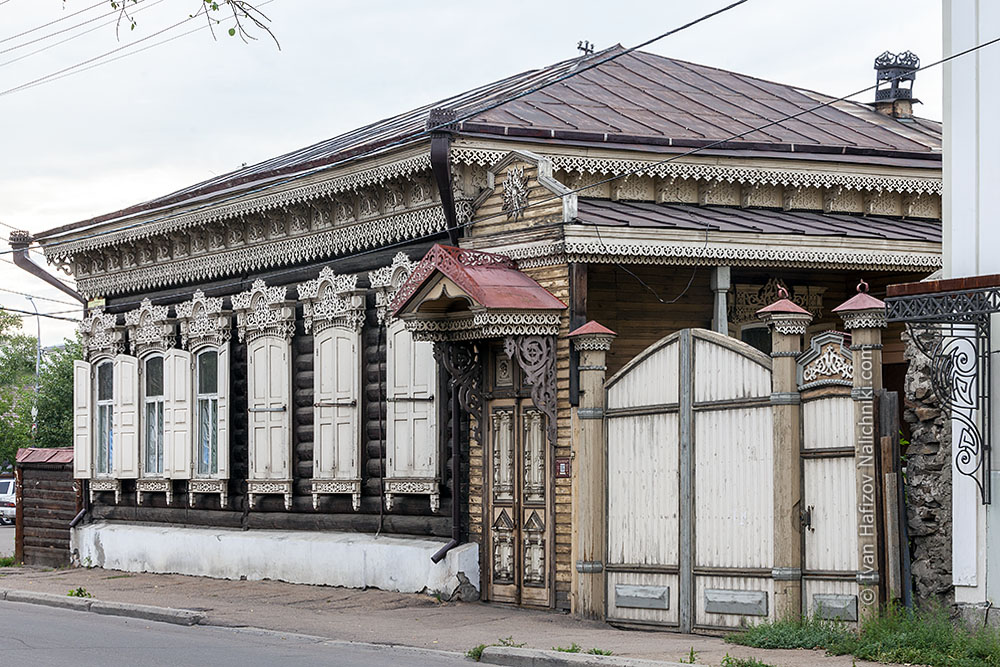
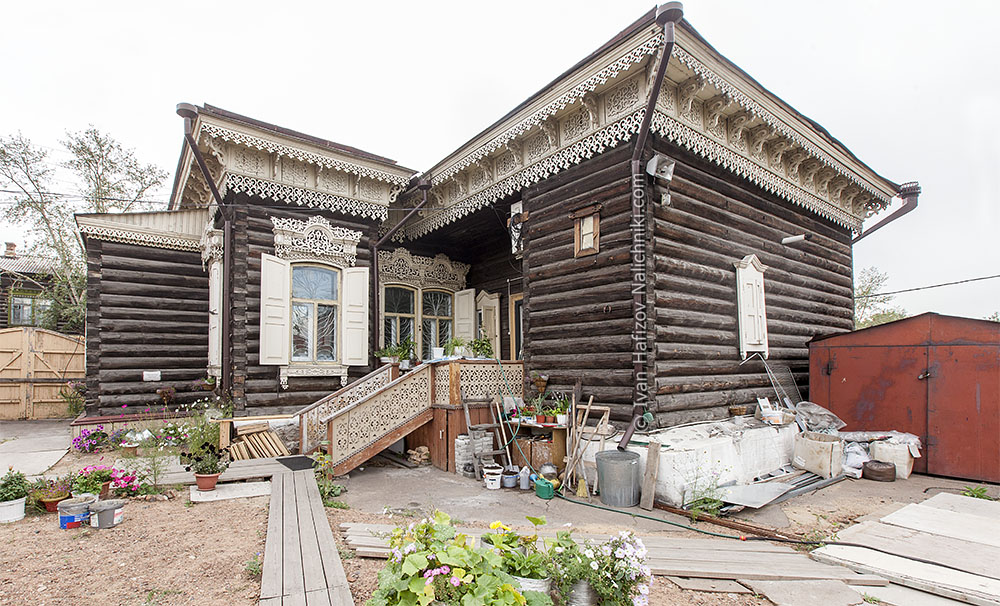
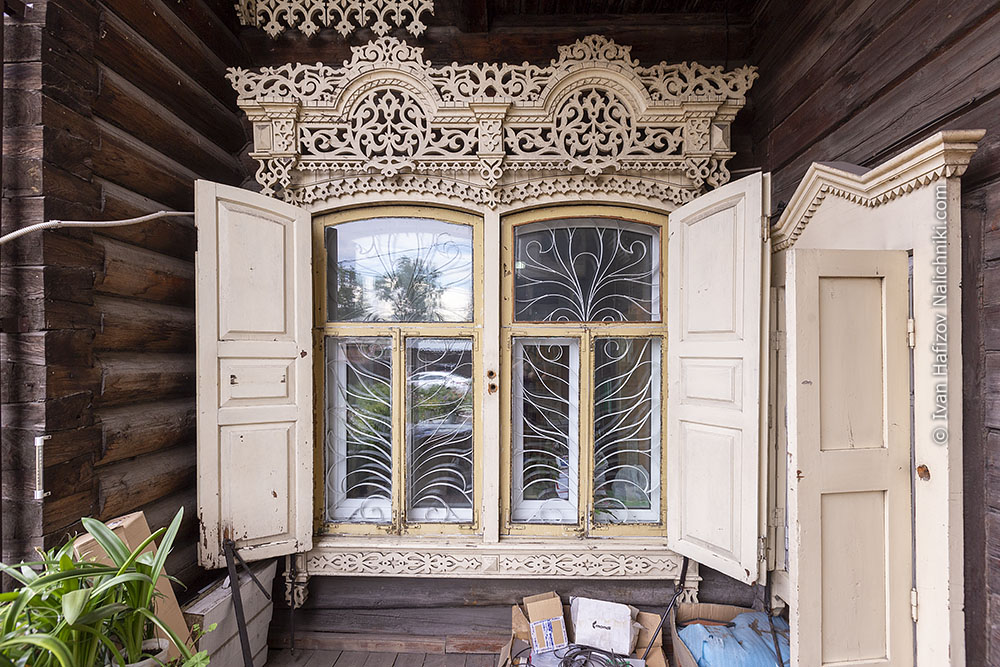
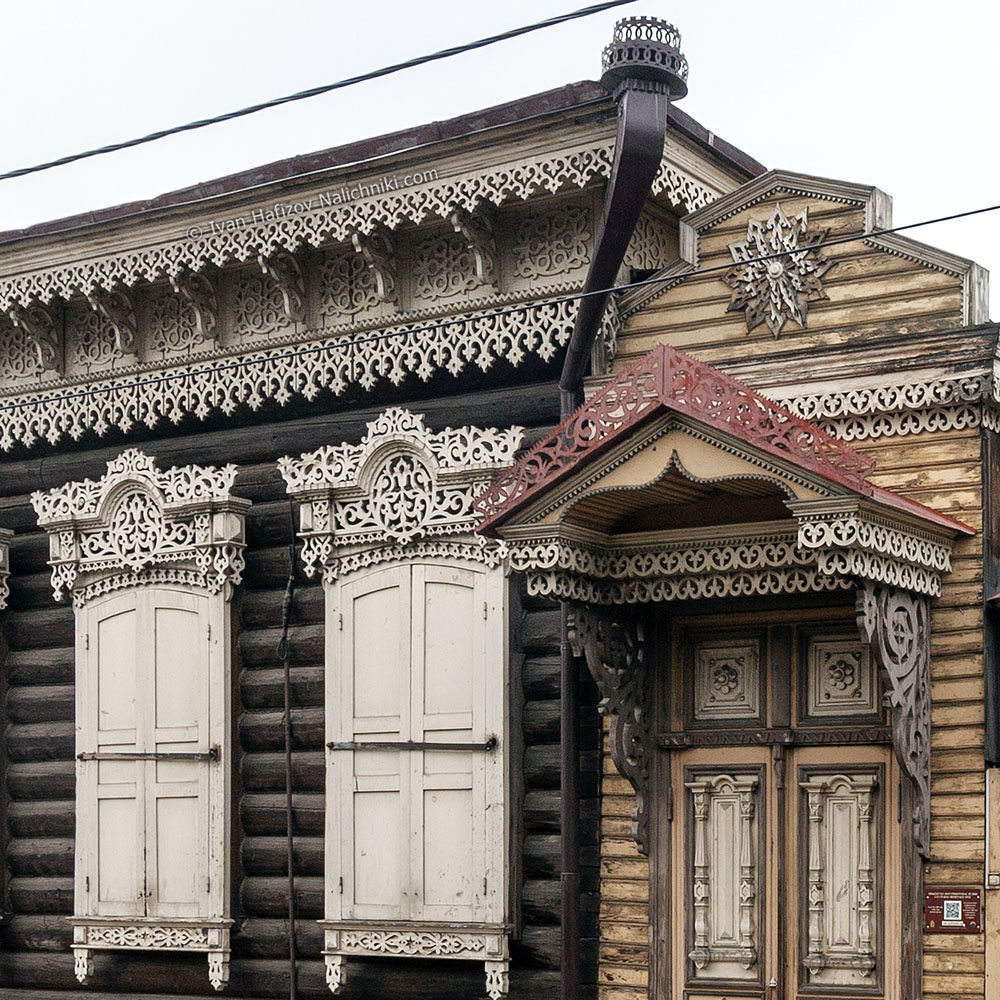
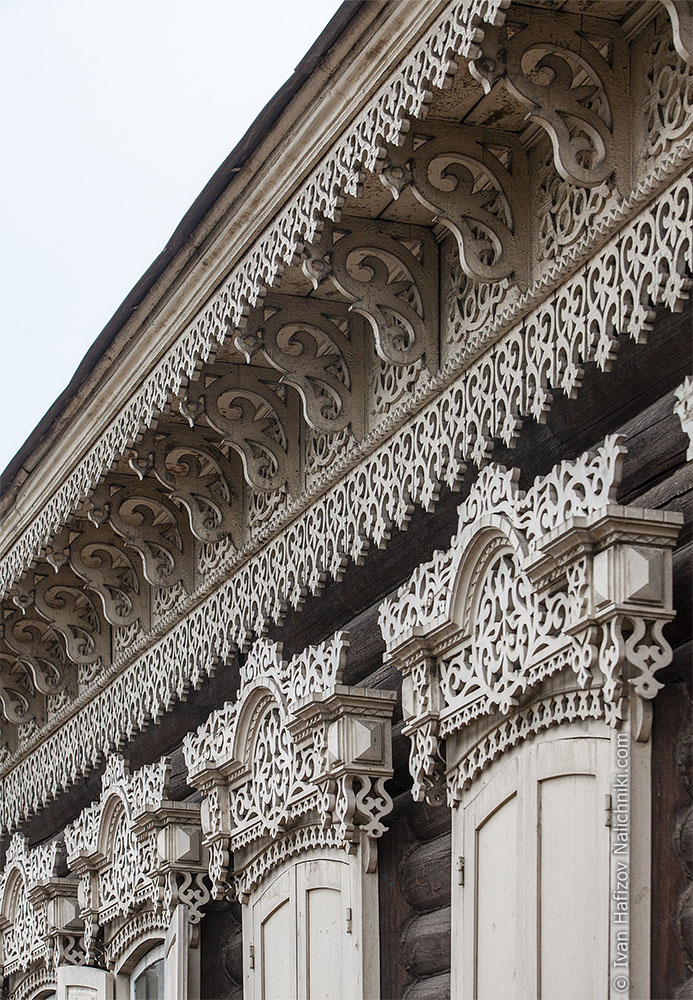
PS The photos show a house from Ulan-Ude. It's not the house where the conversation took place. That happens sometimes. 😊