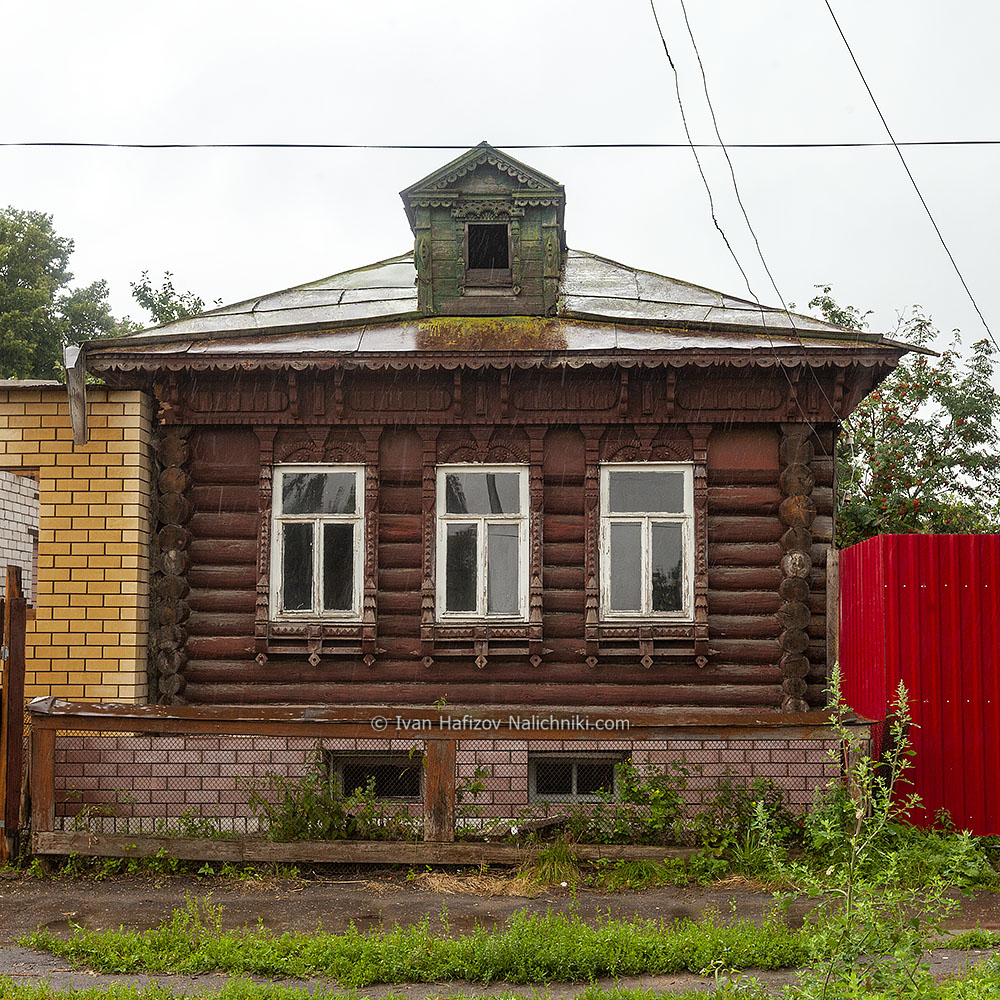
No matter how much you explain the regional differences in nalichniki, there are always people who insist that something is encoded in the carvings.
Over the years they've sent me their theories — some fairly logical (if funny), like the name of the city itself, proposed as the explanation for why nalichniki look similar within a region; and some rather exotic ones, like the homeowner's patronymic, profession, or ethnicity; his attitude toward pagan (always pagan, for some reason) gods; or various numbers, like birth year or number of children.
Of course, any symbols can be carved onto any particular nalichnik — there are no universal rules. I've said before that there is only one rule virtually all nalichnik carvers observed: axial symmetry — the left side mirrors the right.
But I genuinely cannot fathom how any rule — whatever you hear from the mouths of "those in the know" — could hold for every single nalichnik.
1. "Nalichniki have shutters" — not necessarily: the Moscow region has none.
2. "Nalichniki were carved by the homeowner" — not necessarily: they were also ordered from craftsmen or bought ready-made.
3. "The upper part of a nalichnik is more ornate than the lower" — not necessarily: the Ivanovo region is ready to argue the point. And there are also plenty of nalichniki where the top is no different from the bottom at all.
4. "Nalichniki are cut with a jigsaw" — not necessarily: the Nizhny Novgorod region is decorated primarily with nalichniki carved with chisels.
5. "The nalichnik design has several layers" — not necessarily: Yelets or Michurinsk aren't like that at all.
6. "Nalichniki are usually taller than wide" — even this isn't true: in Chukhloma (Kostroma Oblast) and in Yekaterinburg (the Urals), windows are often wider than they are tall.
7. "A nalichnik consists of three or four parts — or at least some number of parts (often with the lower representing the underworld, the upper the heavens, and the middle our world)" — no, not at all: in Sevsk (Bryansk Oblast) there are windows decorated only across the top. And in the Krasnodar Territory there are plenty of nalichniki that have nothing but shutters on the sides — no other decoration at all.
And so on, and so on. :)
Even the idea that nalichniki are carved and wooden can be disproved — you remember the cement nalichniki of Yoshkar-Ola! And they're not the only ones there.
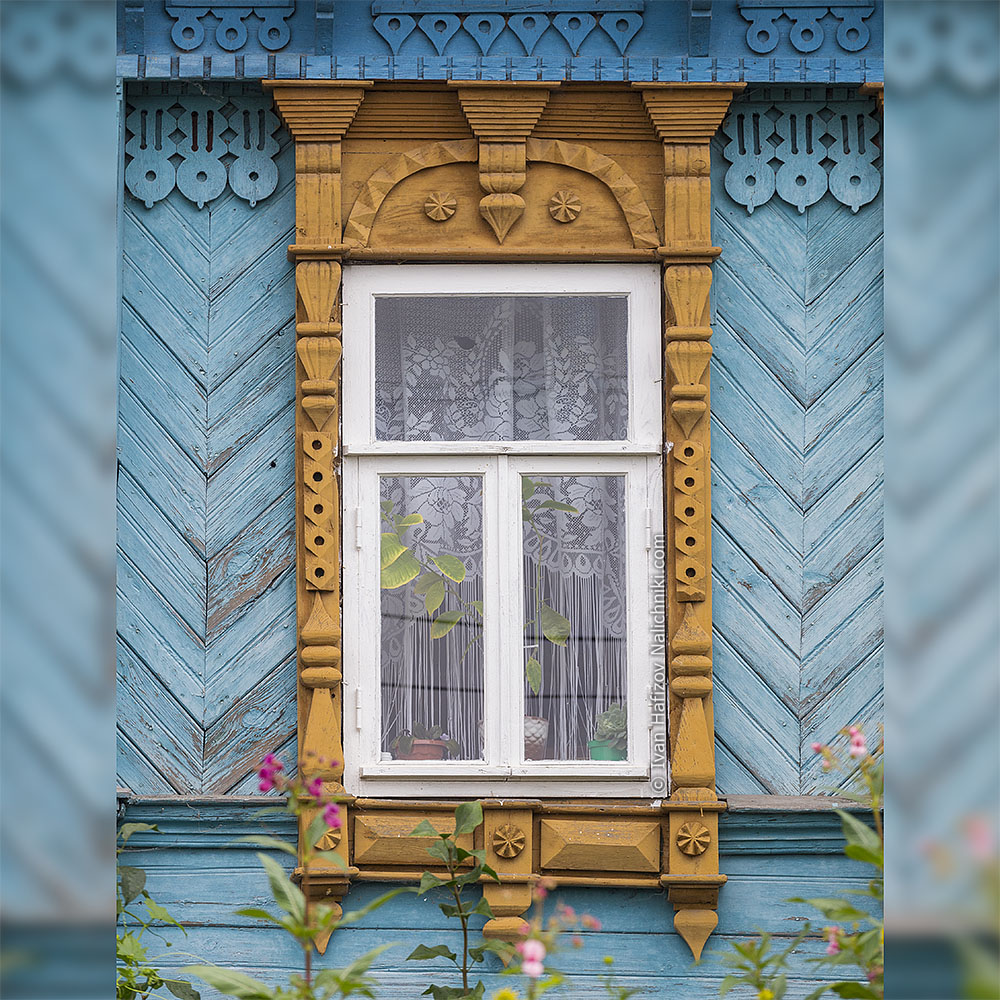
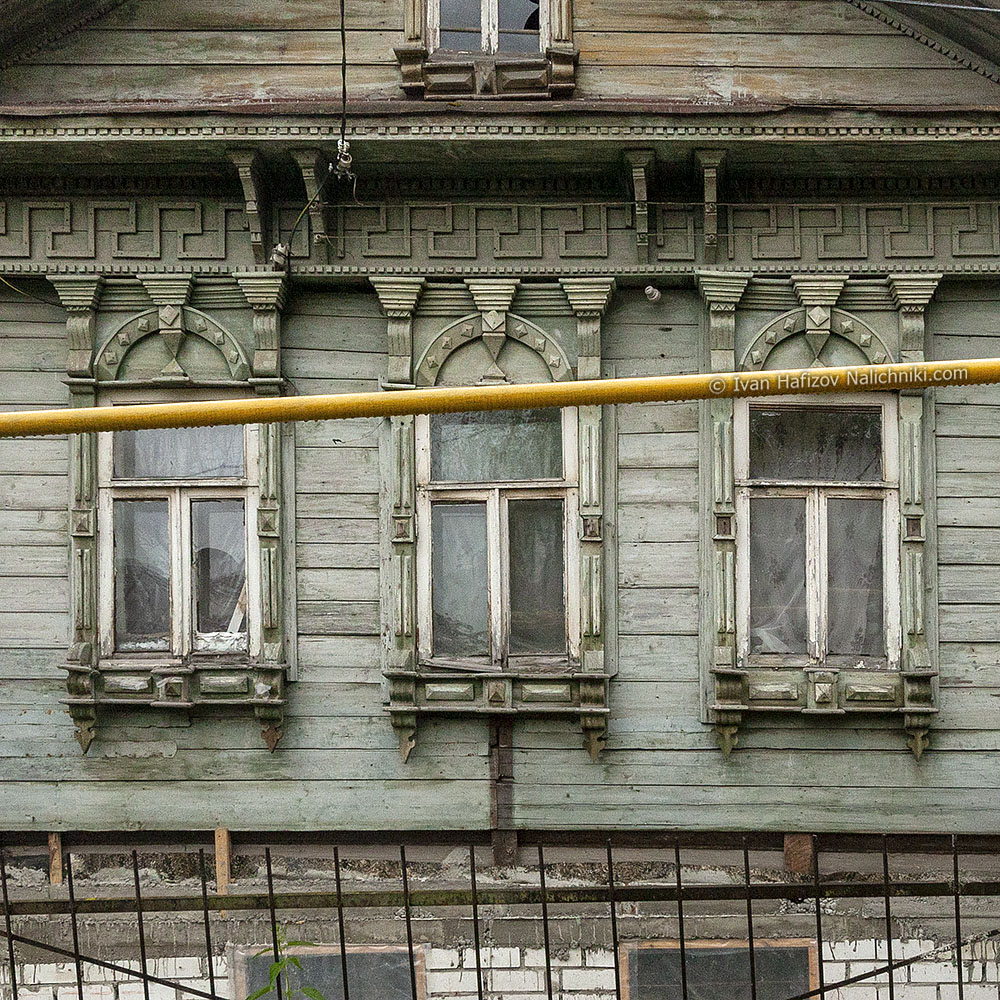
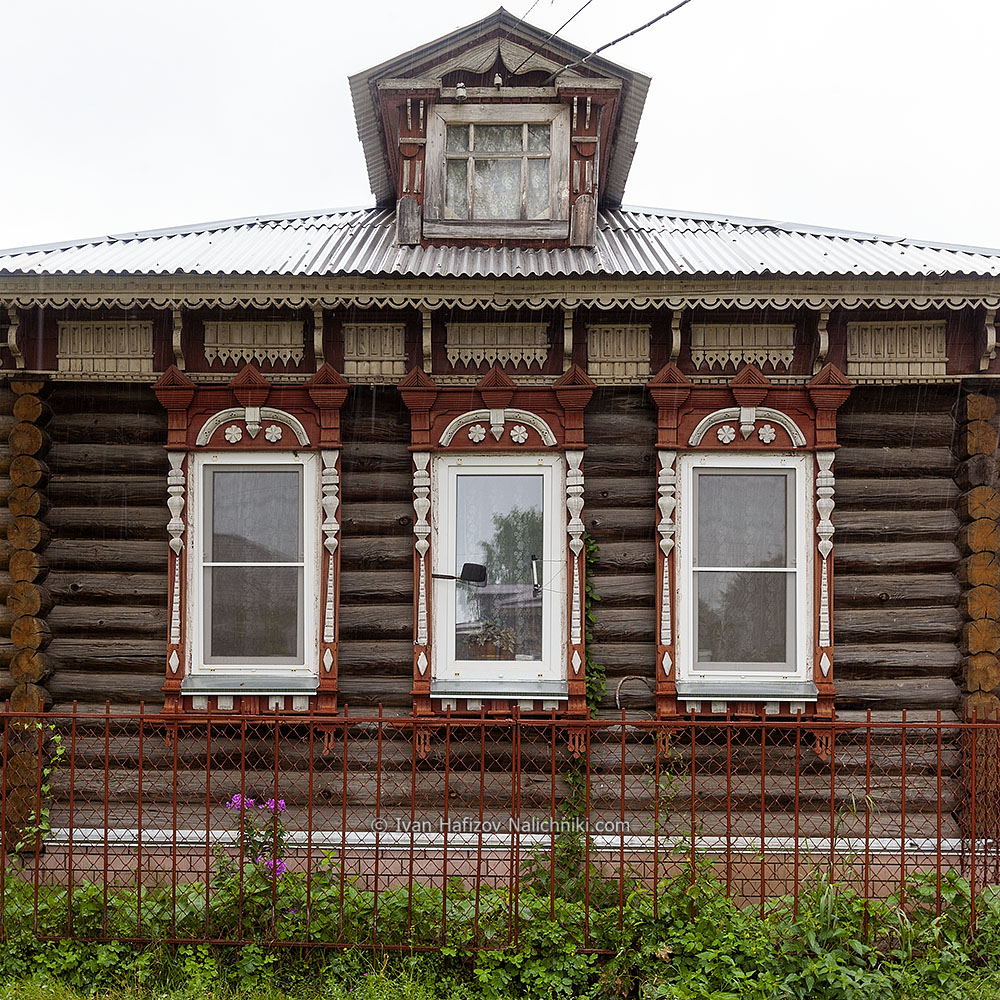
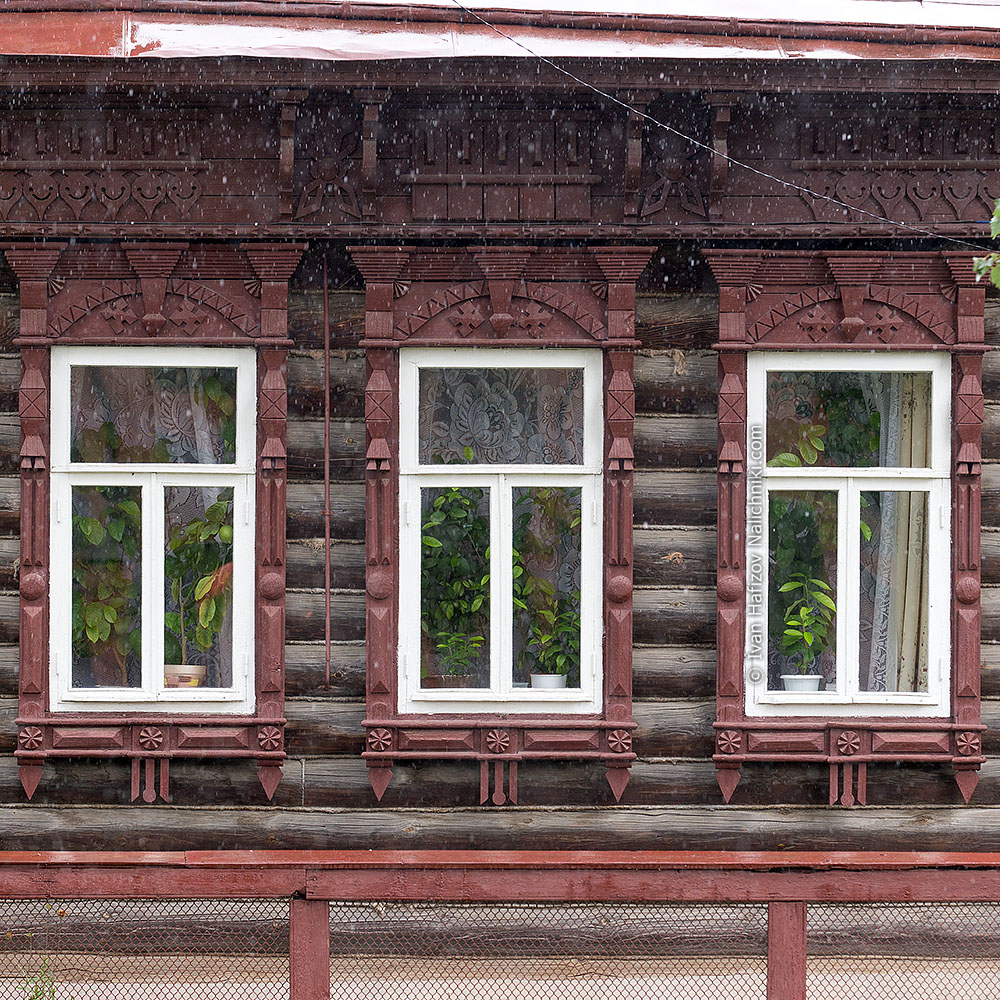
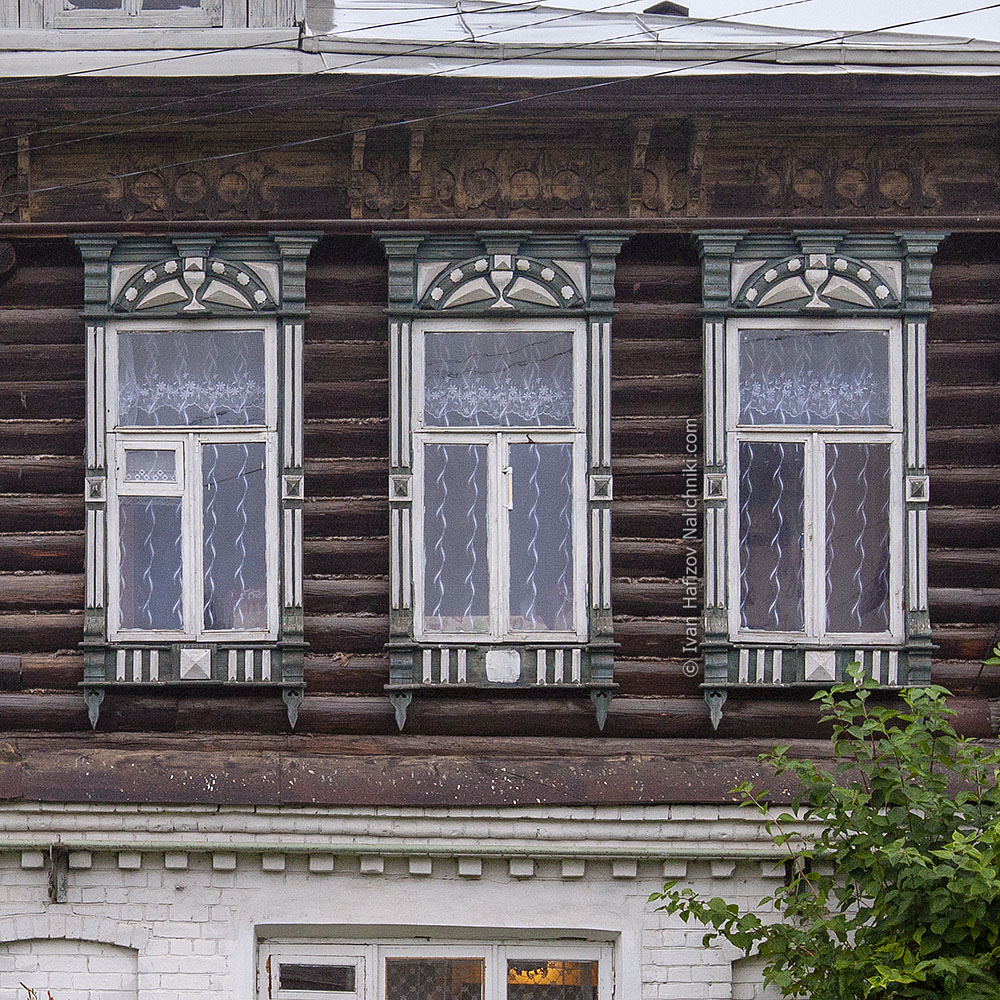
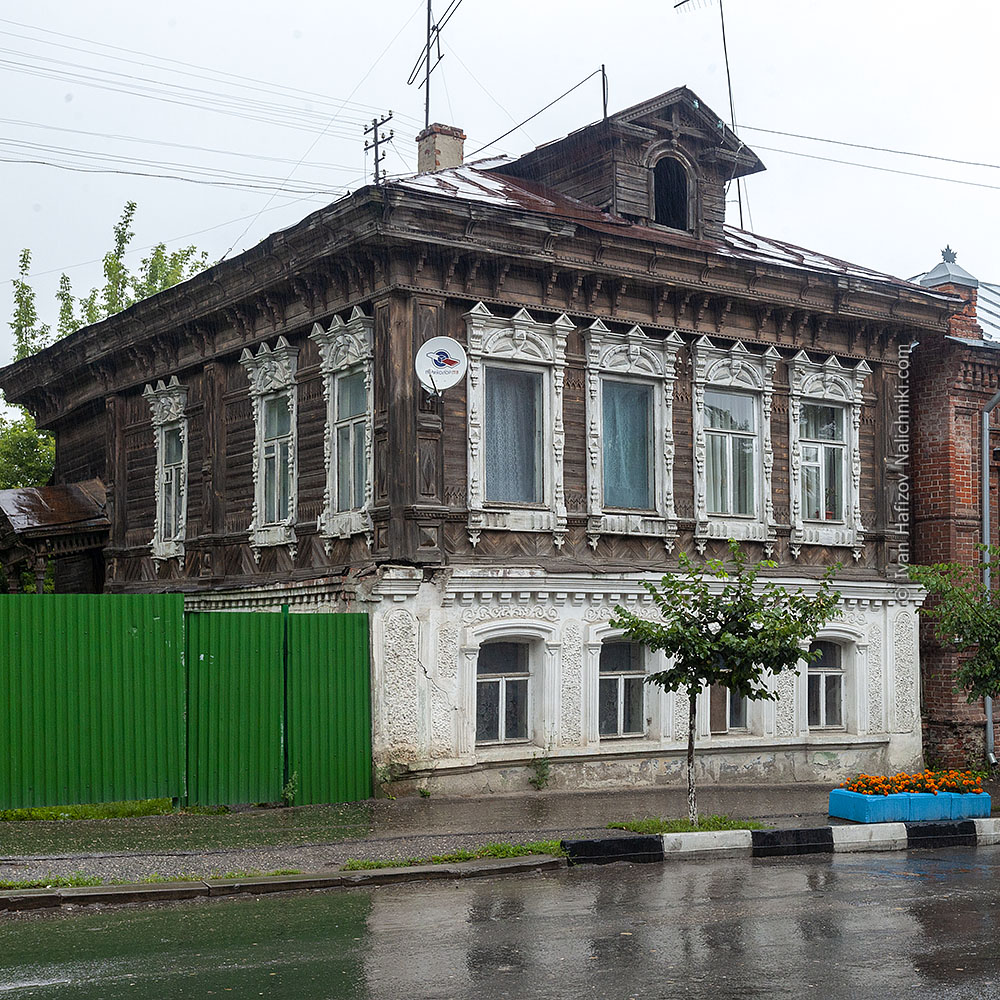
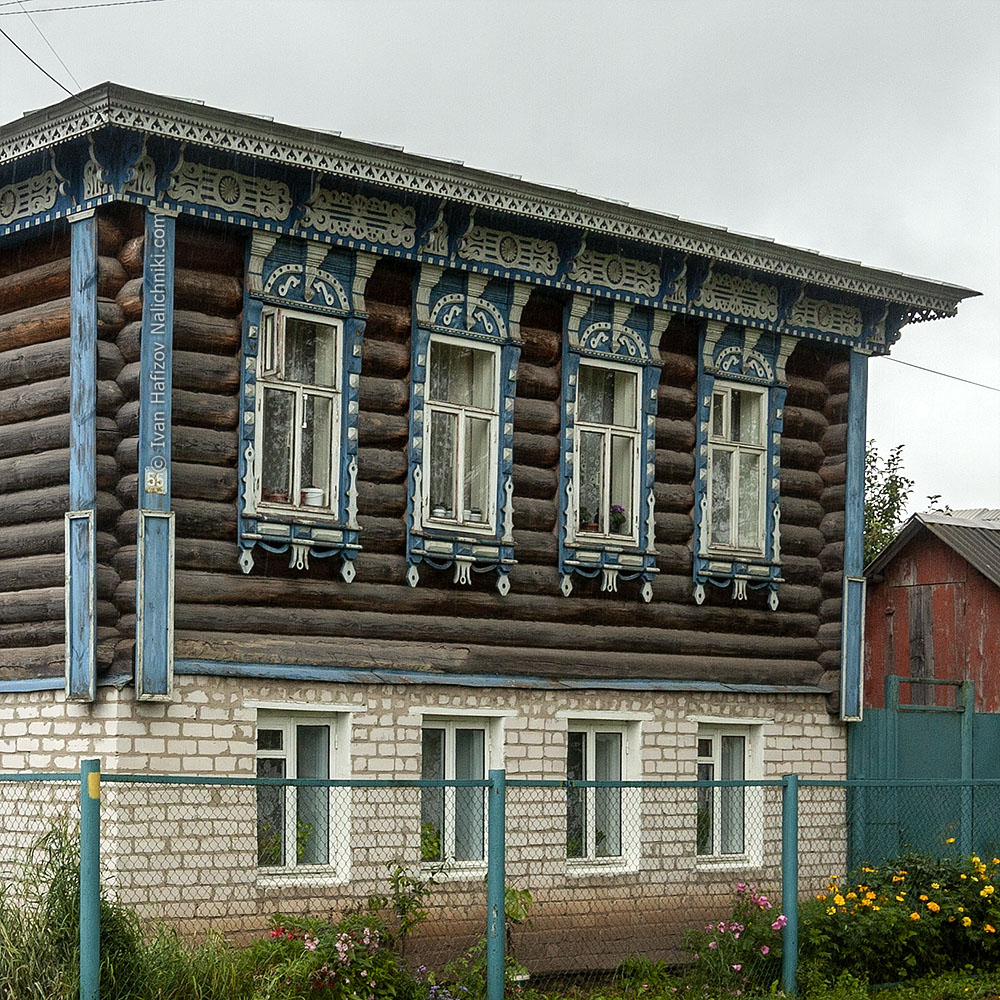
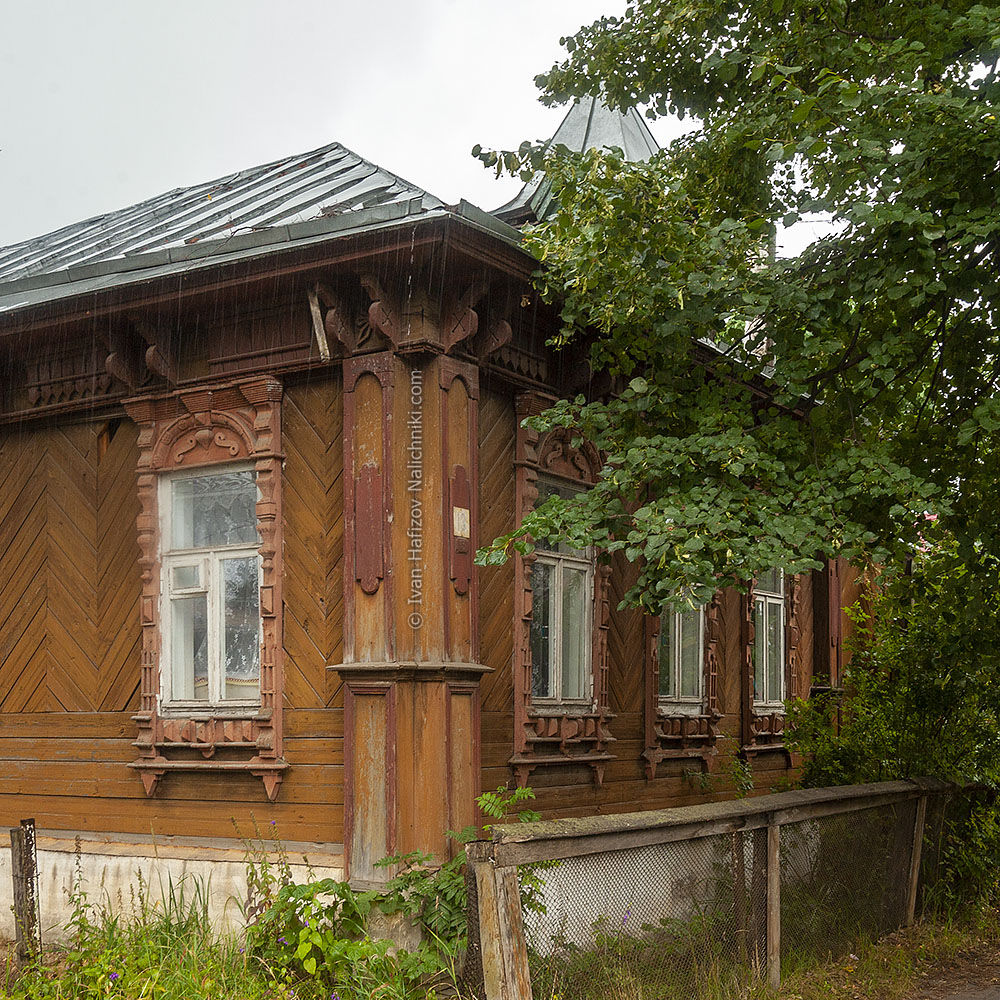
PS The photos show nalichniki from Pavlovo, Nizhny Novgorod Oblast.
They're quite substantial pieces. You can recognize them by a rectangular ochelia with three capitals on the applied half-columns, and an applied arch directly above the window.