...— No, I really couldn't tell you anything about the nalichniki — who carved them... must be a hundred years old... No, I just don't know...
— Well, can you at least tell me how old the house is?
The woman looks at me with tired eyes. I shrink inwardly — something heavy and deep in them catches at me. As if she's saying: your questions are nonsense, and your whole life is nonsense.
Then she comes down off the porch and steps closer.
— I... young man, I just don't really talk to anyone... lately. I have no need to, you know?
I start to think she takes me for some kind of social worker who came to talk — I was about to interrupt her, but she suddenly continues:
— After my mother died I started going to the cemetery more often. I don't want to talk to people, but I never talked to her as much in my life as I do now. At least she asked me not to come, and I promised I wouldn't — but my soul begs... no, no, and then yes, I go anyway. To talk. I'm sorry, I've sat here a hundred times — but here I am again, Mom — so just listen. She listens. I don't believe in any of that otherworldly business, but I believe she listens.
I stay quiet — what can words do here?.. You want to turn transparent, let the wind dissolve you into sounds and smells at a moment like this.
And the woman leans her back against the porch post and speaks steadily and softly into the air, as if not to me.
— And so, you know, once I come — oh! The neighboring grave is completely overgrown and the stone had toppled over. How had I not noticed before? The stone had been standing upright — an unusual one, seemed very old; I thought the inscription had worn away, I couldn't make out a year or a name, but when I started cleaning I realized I was wasting my time — no inscription, apparently. How hadn't I noticed this before? It needed tending. Well, it's no trouble for me, I'd come out anyway. I took care of it too. Kept an eye on it. Cleared the grass, fixed the fence where there was none. And that was that. Then one thing after another — I called a man, does he do that kind of work? Level the stone. They came. They did the job. Then one of them asks: is that your family? Just like that, a complete stranger asking. I say no, it's not my family — it's just the grave next to my mom's, it was just lying there neglected, so I decided to tend it. Well, I forgot about it. I just tended it a little after that — small things. Clear the grass and snow; it shouldn't be left to itself, after all — a person lived here, not an animal... That's how we have it at our cemetery: the paths are clean, it's just that Mom's in a far corner and they don't clean there. I complained — but only wasted my breath.
Here...
She pauses, remembering.
— Well, then our father found me. We have a good father here. They say. He worked in the police under Gorbachev, then went somewhere, and when he came back he became... I don't go to church, even though I was baptized as a child, I just don't go. I don't believe. But people spoke well of him. They tell me different things now — about the Tsar, about the Soviet government, how they broke people, destroyed churches... Well, nobody broke my grandmother. Born in 1877. She lived long enough to see me, and she... there was always a certain mockery of faith in our family, always some atheist note, always. Both grandmother and grandfather. And even though my mother was baptized in infancy, she never went to church and we never even discussed it... And so this father comes looking for me at the cemetery. I wasn't surprised — well, you never know. And he started asking about this neighboring grave, what it was, why I was tending it. I explained. He was so pleased at first. We just talked. As a person, not as a priest. I told him — why hide it? — that Mom was here, that I come now. And he says: you know, it's no coincidence I found you. Everyone here knows you're tending this grave; you're not local, I could tell right away. And he went quiet — I mean, I inwardly braced myself: "What does he mean by that?" And he speaks slowly, smoothly, in a deep voice, the way all priests do: "Well, you know that God loves everyone — sinners and the righteous alike. I just wanted to tell you; you'd have found out eventually anyway, just later. The thing is, this grave is old, well-known here..."
She gets distracted for a second, as if dismissing some stray thought, shakes her head, blinks several times, and continues as if speaking for herself:
— Well, in short, he says that before him there was a Father Arseny here, who knew about many old graves and had spoken of this one too. And this is the grave of Nikolai Plotnikov — a peasant, but, as we'd say today, he led a double life. By day, like everyone else, he worked in the fields; by night he robbed on the road. He had a gang; they robbed, and sometimes killed. It seems many people were killed. They say. This went on for several years before he was found out and caught. In 1904 they finally took him — a big case, written up in the newspapers. They hanged him, of course. And then buried him far from everyone else; back then it wasn't even the edge of the cemetery. There.
He tells me all this, and I don't even know what to say. Before that I didn't know whose grave it was — and it was better that way. Why would I need all this? And now what do I do? Stop cleaning — give it up? Or let it grow over? And now just think — a person like that is lying right next to Mom. There's nothing you can do. I'll clean it anyway. You know, even though I don't believe in an afterlife — but what if, all the same. Maybe I'm thinking: maybe nobody ever did anything good for him in his whole life? So now at least let him know there are kind people.
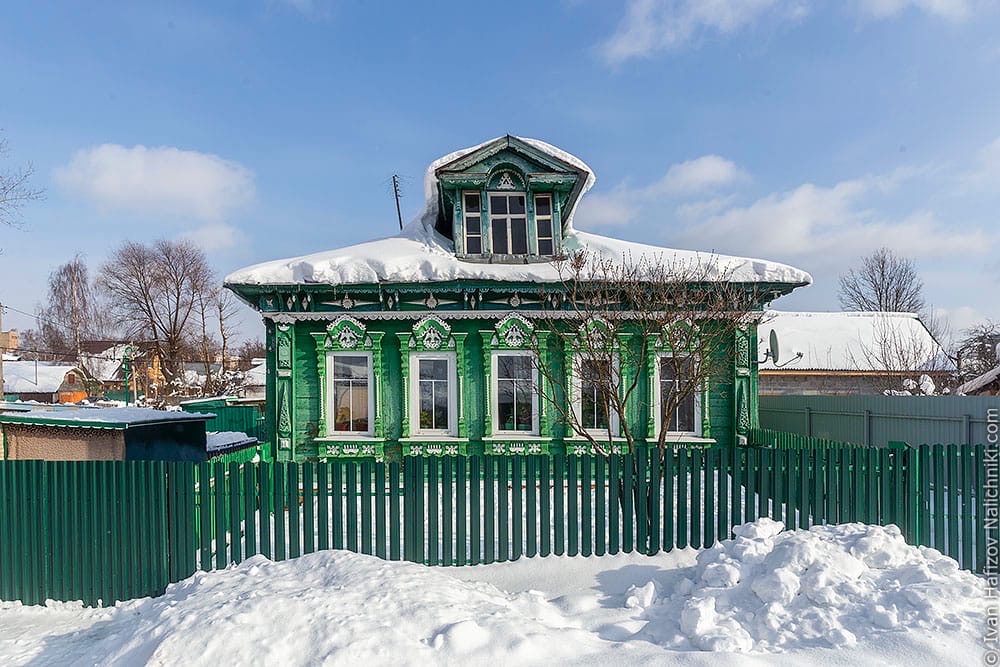
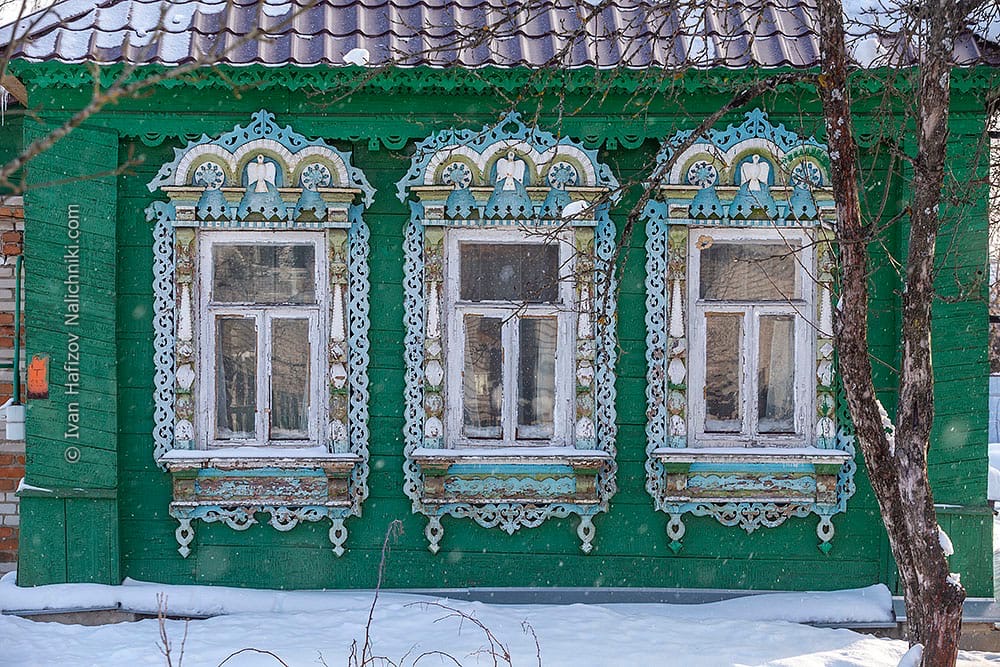
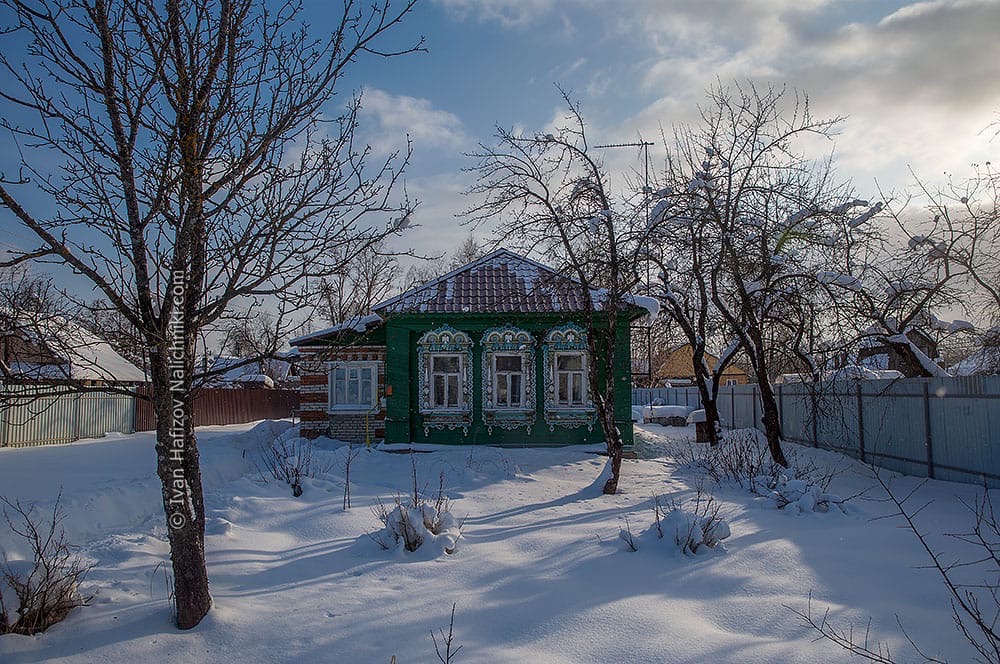
PS1 And the photos show three unusual nalichniki with birds from Kurovsky, Moscow Oblast.
PS2 On the first day, the nalichniki calendar crowdfunding collected 54% of its goal — so maybe tomorrow we'll reach the full minimum needed for the print run. You're incredible! 😍
If you haven't reserved your copy yet, join us! Let's do this together! The link: https://planeta.ru/campaigns/nalichniki2022